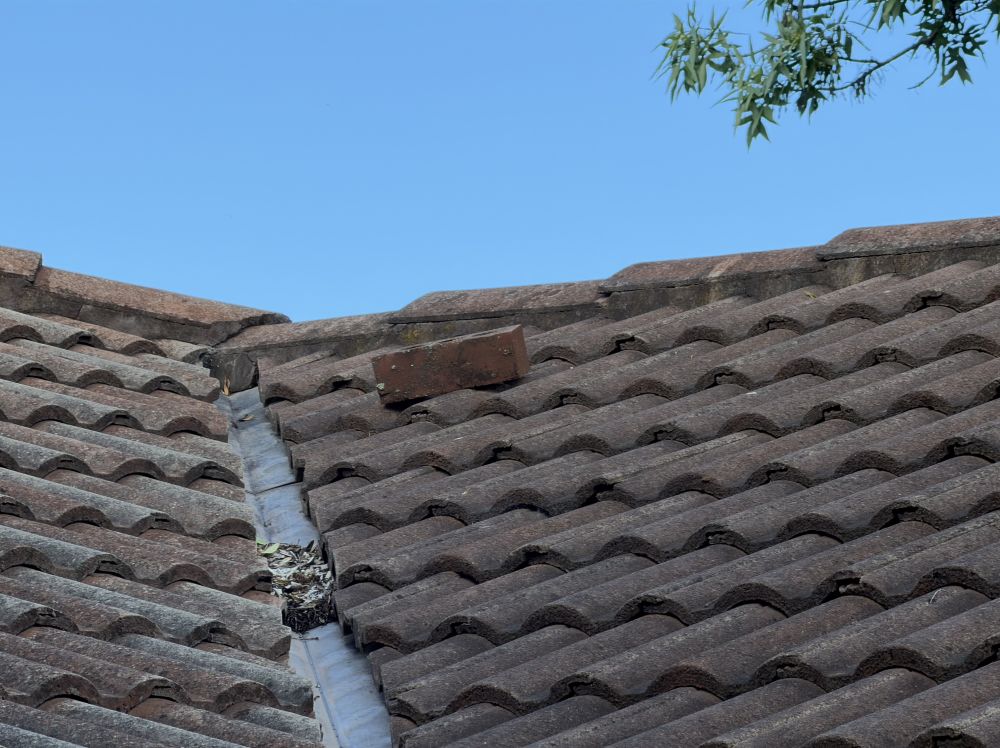
At four on a November afternoon the sky over the island turns the colour of slate, and twenty minutes later a brown ring appears on a bedroom ceiling that was spotless at lunch. Most owners reach for a bucket and a tube of sealant. Following one such job from the first drip to the final test shows why roof leak repair singapore work is mostly detective work, and why the patch applied nearest the stain so often fails by the next storm.
The First Drip Is Rarely Above the Stain
Water that gets through a roof seldom falls straight down. It runs along the underside of a slab, follows a conduit, soaks sideways through screed and finally shows itself at the lowest or weakest point, which may be metres from where it entered. In our example the ring sits near the window, yet the entry point proves to be a cracked upstand by the water tank. Mark the stain, photograph it with a date, and resist drawing conclusions from its position.
What to Do Before Anyone Climbs Up
The useful first hour is spent indoors. Move furniture, switch off any light fitting near the wet patch, and note when the dripping began relative to the rain: at once, after an hour, or only the following morning. Immediate leaks point to an open gap such as a slipped tile or failed flashing. Delayed ones suggest water ponding and seeping slowly through a membrane. That single observation, passed to the contractor, shortens the inspection more than any photograph.
Three Roofs, Three Usual Suspects
Local buildings carry broadly three kinds of roof. Flat reinforced concrete slabs fail at the membrane, at outlets choked with leaves and at the joint where slab meets parapet. Pitched clay or concrete tiles fail at cracked units, perished underlay and the valleys where two slopes meet. Metal sheeting fails at fasteners whose washers have hardened in the heat, at end laps and around skylights. Knowing which you own tells you where an inspector ought to look first.
Dry Survey, Then Wet Proof
A proper survey is done dry and then, where needed, wet. The inspector walks the surface, lifts suspect tiles, probes blistered membrane and checks every penetration: pipes, aerials, air-conditioning brackets, solar mounts. Moisture meters and thermal cameras help trace damp that the eye cannot see. On a flat roof a controlled flood test, with outlets plugged and water left standing, confirms the diagnosis. A roofing and waterproofing contractor who quotes from the ground floor without doing any of this is guessing.
Patch, Section or Whole Surface
Once the source is known, the remedy falls into one of three sizes. A local repair replaces a few tiles, reseals a flashing or re-dresses one outlet. A sectional repair strips and relays membrane over a defined bay with proper overlaps onto sound material. A full renewal treats the entire surface. In our case the cracked upstand needs the second: cutting out the damaged render, forming a fillet, and running new membrane up the wall and under a cover flashing.
Why a Bead of Silicone Disappoints
Silicone squeezed over a crack is the commonest repair and the shortest lived. Tropical sun bakes it, daily expansion and contraction tears it from the surface, and water finds the edge within a season or two. Sealant has a place as one layer in a detail, never as the detail itself. Ask what lies beneath any bead you are shown: primer, reinforcing fabric, a compatible membrane. If the answer is nothing, the repair has a short future.
Gutters, Outlets and the Upkeep Nobody Schedules
A surprising share of leaks begin with nothing broken at all. Leaves from a neighbour’s tree block an outlet, water backs up above the height the waterproofing was designed for, and it spills over the top of the upstand. Clearing gutters and outlets before the wetter months, and again midway through, costs little. So does trimming overhanging branches and checking that air-conditioning installers have not left debris or drilled through the membrane on their last visit.
Who Answers for a Shared Roof
Responsibility depends on the property. A landed owner answers for the whole roof. In strata developments the roof is usually common property looked after by the management corporation, although an owner’s own additions may be treated differently. In public housing the arrangement differs again between the block’s structure and a flat’s interior. Report promptly and in writing to the relevant body, since delay tends to enlarge both the damage and the argument about who caused it.
Signing Off With Water, Not Words
Do not accept a repair on a dry day’s appearance. For a flat roof, ask for a repeat flood test over the repaired area, held for a full day, with photographs. For pitched and metal roofs, a hose test working upwards from the eaves does the same job. Obtain a written description of what was done, the materials used and the warranty period for workmanship. Then leave the ceiling unpainted through one heavy storm before making good.
What to Do This Week
If water is entering now, contain it, record the timing and book an inspection; do not wait for the dry spell. If the roof is merely old, arrange a survey before the monsoon instead of after it. Choose the firm that explains where the water gets in and proves it, not the one with the quickest quote. Handled this way, roof leak repair singapore becomes a single well-aimed job instead of an annual ritual with a bucket.