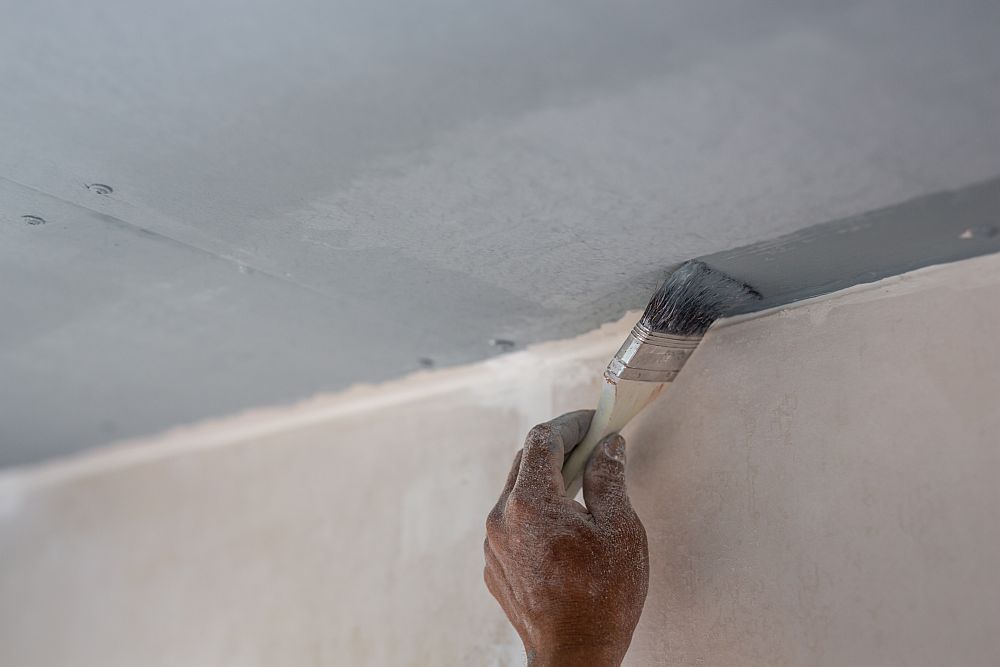
When Mei Lin first noticed the hairline crack snaking across her HDB flat’s bathroom ceiling, she dismissed it as merely cosmetic, until chunks of concrete began falling into her morning tea. cement ceiling repair had suddenly become an urgent priority, transforming what seemed like a minor blemish into a pressing safety concern that demanded immediate attention.
For countless Singaporeans living in ageing flats, the sight of peeling paint, rust stains, or crumbling concrete overhead has become an unwelcome reality. These symptoms often signal the beginning of a deterioration process that, left unaddressed, can compromise both safety and peace of mind.
Understanding the Silent Deterioration
The concrete ceiling above your head tells a story of time, moisture, and chemistry. In Singapore’s humid climate, a natural process called carbonation occurs when carbon dioxide penetrates the concrete and interacts with water. This seemingly innocent chemical reaction triggers the corrosion of steel reinforcement bars embedded within the ceiling slab. As these bars rust and expand, they push against the surrounding concrete, causing it to crack, bulge, and eventually break away, a condition known as spalling concrete.
According to Singapore’s Housing Development Board, “Spalling concrete is a common issue for older buildings, especially in home areas with damp conditions, such as kitchens and toilets. It is largely caused by carbonation, a natural deterioration process.”
Recognising the Warning Signs
Understanding when your ceiling requires professional attention can mean the difference between a manageable repair and a costly structural intervention. The early indicators often whisper before they scream:
• Visual clues: Uneven or bubbling paint, particularly in concentrated spots
• Colour changes: Brown or reddish stains indicating rust from steel reinforcement bars
• Textural differences: Hollow sounds when tapping affected areas
• Physical deterioration: Small flakes or chunks of concrete falling
• Structural concerns: Hairline cracks that appear to widen over time
These warning signs typically appear first in moisture-prone areas such as bathrooms, kitchens, and balconies, where humidity accelerates the deterioration process.
The Human Cost of Delay
For many homeowners, the temptation to postpone ceiling maintenance stems from both financial concerns and the hope that minor issues will remain stable. Yet this approach often proves counterproductive. What begins as surface-level damage inevitably spreads, weakening the building’s structural integrity and creating genuine safety hazards.
Consider the recent case of a 69-year-old man whose neglected ceiling developed ten stalactites, earning his flat the unfortunate nickname “Little Guilin house.” Such extreme deterioration represents years of accumulated damage that could have been prevented with timely intervention.
Professional Assessment vs DIY Approaches
The question of whether to attempt self-repair or engage professional services depends largely on the extent of damage. For minor surface spalling affecting areas smaller than a mobile phone, homeowners with appropriate skills might consider DIY solutions. However, larger affected areas, exposed reinforcement bars, or structural concerns require professional expertise.
Professional repair costs vary significantly, ranging “about $300 for spalling concrete in an area the size of a cellphone to $1,200 for the entire ceiling of an HDB toilet, according to industry professionals.
The Repair Process Demystified
Professional concrete ceiling restoration follows a systematic approach designed to address both visible damage and underlying causes:
• Initial assessment: Thorough inspection to determine damage extent and root causes
• Preparation: Removal of loose concrete and cleaning of corroded reinforcement bars
• Treatment: Application of rust inhibitors to prevent future corrosion
• Reconstruction: Patching with polymer-modified cement mortar or appropriate materials
• Protection: Sealing and painting to prevent moisture infiltration
The specific techniques employed depend on whether the damage represents surface spalling, deep structural issues, or extensive deterioration requiring reinforcement replacement.
Prevention: Your First Line of Defence
Rather than waiting for problems to emerge, proactive maintenance significantly reduces the likelihood of serious ceiling issues. Effective prevention strategies include:
• Regular painting: Creating a protective barrier against carbonation
• Prompt sealing: Immediately addressing cracks, holes, or unused drill points
• Humidity control: Ensuring adequate ventilation in moisture-prone areas
• Routine inspections: Checking for early warning signs during regular home maintenance
Financial and Legal Considerations
In Singapore’s property landscape, homeowners bear responsibility for maintaining their flat’s interior, including ceiling repairs. However, certain situations involve shared responsibility with neighbours or town councils, particularly when leaks originate from upper floors or common property.
The HDB’s Goodwill Repair Assistance programme offers eligible homeowners the opportunity to split repair costs equally with the housing authority, making professional restoration more financially accessible.
Making Informed Decisions
The choice between immediate professional intervention and delayed action often comes down to understanding the true cost of waiting. While professional repairs represent an upfront investment, they prevent the exponential costs associated with extensive structural damage, potential injuries, and emergency interventions.
For families like Mei Lin’s, investing in timely professional assessment and repair restored not only the physical integrity of their ceiling but also their confidence in their home’s safety and stability.
Whether you’re dealing with the first signs of deterioration or facing more advanced damage, understanding your options empowers you to make decisions that protect both your property and your family’s well-being. In Singapore’s humid climate, vigilant maintenance and prompt professional cement ceiling repair represent essential investments in your home’s longevity and your peace of mind.